Budget 2026-27: The Numbers Behind the Noise
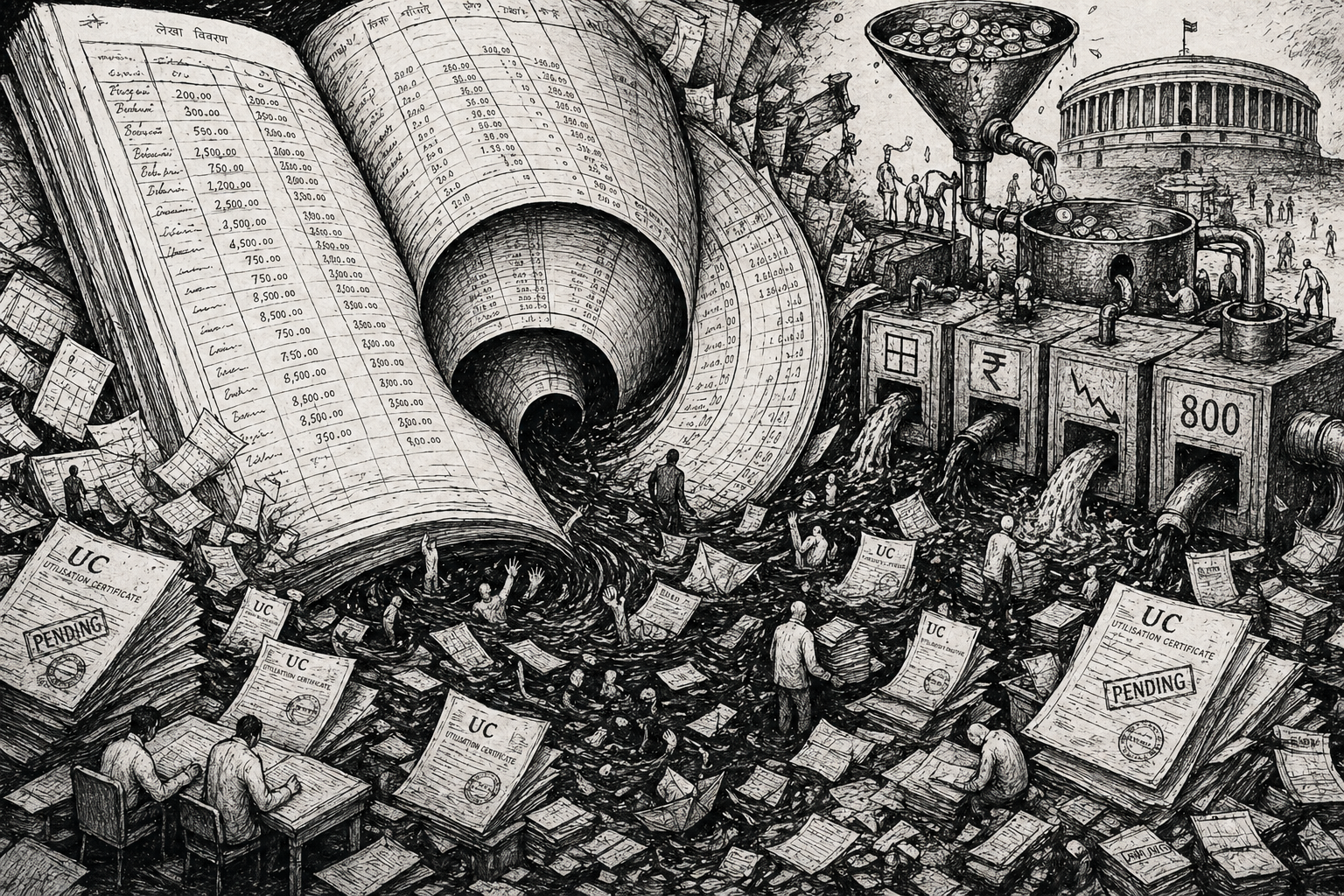
Inside the Demands for Grants, the off-budget funds, and the Rs 95,125 crore that Parliament did not vote on.


Inside the Demands for Grants, the off-budget funds, and the Rs 95,125 crore that Parliament did not vote on.


Trump captures Maduro, threatens to annex Greenland, and strangles Cuba with secondary sanctions. The system that took 47 years to build is being dismantled in weeks.


Why the US invested 94 times more in AI than India last year, why 62% of India's top engineering talent emigrates, why every semiconductor fab proposal keeps collapsing, and what this means for an IT sector already shedding tens of thousands of jobs to the very technology India cannot build.


Regulations meant to prevent student suicides triggered Supreme Court intervention, BJP resignations, and exposed how India destroys thousands of crores in human capital annually through institutional discrimination while allocating minimal resources to equity enforcement.


Three days before the Union Budget 2025-26, while analysing the Economic Survey's critiques of state "fiscal populism," I kept returning to a single line in last year's budget documents. The Department of Economic Affairs had allocated Rs 62,593 crore to something called "New Schemes" - with no details available. By the revised estimates, only Rs 9,068 crore had been spent. That is Rs 53,525 crore that simply disappeared between announcement and implementation, with no parliamentary questions asked, no CAG audit conducted, and no public explanation of what these "schemes" actually were.


The Economic Survey 2026 proposes ministerial vetoes over RTI. This is the third phase of dismantling the law that exposed lakhs of crores in corruption and made welfare delivery accountable to citizens.


On 27 January 2026, Assam Chief Minister Himanta Biswa Sarma stood before reporters and said something that should have stopped the nation. "Himanta Biswa Sarma and the BJP are directly against Miyas," he declared, using the derogatory term for Bengali-speaking Muslims in Assam. "We are saying it openly; we are not hiding it. We are ensuring that they cannot vote in Assam."


What the government's annual report card omits, obscures, and attempts to spin and why it matters three days before the Union Budget.


Why Gita Gopinath's framing of air pollution as an economic crisis could finally force policymakers to act


How cesses that never reach states, chronic underspending on welfare, and interest payments eating a quarter of expenditure reveal what India's budget actually does


Behind the headlines, the agreement contains no CBAM exemption, potential threats to generic pharmaceuticals, and automobile tariff cuts that reshape domestic manufacturing


On tanks, tableaux, constitutional promises, invisible workers, and the distance between sovereignty and citizenship


Where India's policies meet India's people. Comics about migration, welfare, work, and the distance between announcement and implementation.


India's top 1% now holds more wealth than during the British Raj. The government's response—Jan Dhan accounts, PM-KISAN transfers, DBT efficiency—smooths consumption flows while leaving the stock of wealth untouched. Meanwhile, Scotland is attempting something India refuses to consider: legislating wealth redistribution. This essay examines why.


Indore won "India's cleanest city" eight consecutive times while its pipes rotted underground. The gap between dashboard governance and ground reality is now measured in bodies.


On how a decade of academic persecution, public university destruction, and systematic defunding has set the stage for legislation that will complete the transformation of education from a public good to private extraction—while raising a generation unprepared for citizenship.


While Brazil, South Africa, and even France condemned the most brazen violation of sovereignty in decades, India offered "deep concern" and a call for "dialogue"—without once naming the United States.


A 3.2% conviction rate, years of pre-trial imprisonment, and a legal architecture designed to deny bail—India's anti-terror law has become the BJP's favoured instrument for silencing dissent.


Police found 1.1% of attacks were communal. Indian media claimed genocide. The gap between these numbers tells the story of a propaganda machine serving the BJP's domestic politics at the expense of actual Bangladeshi Hindus.


How the Modi government's demonetisation, GST, and COVID lockdown didn't just damage small enterprises—they accelerated the greatest wealth transfer in independent India's history.